


This post is also available in:
Guide to choosing a wedding veil
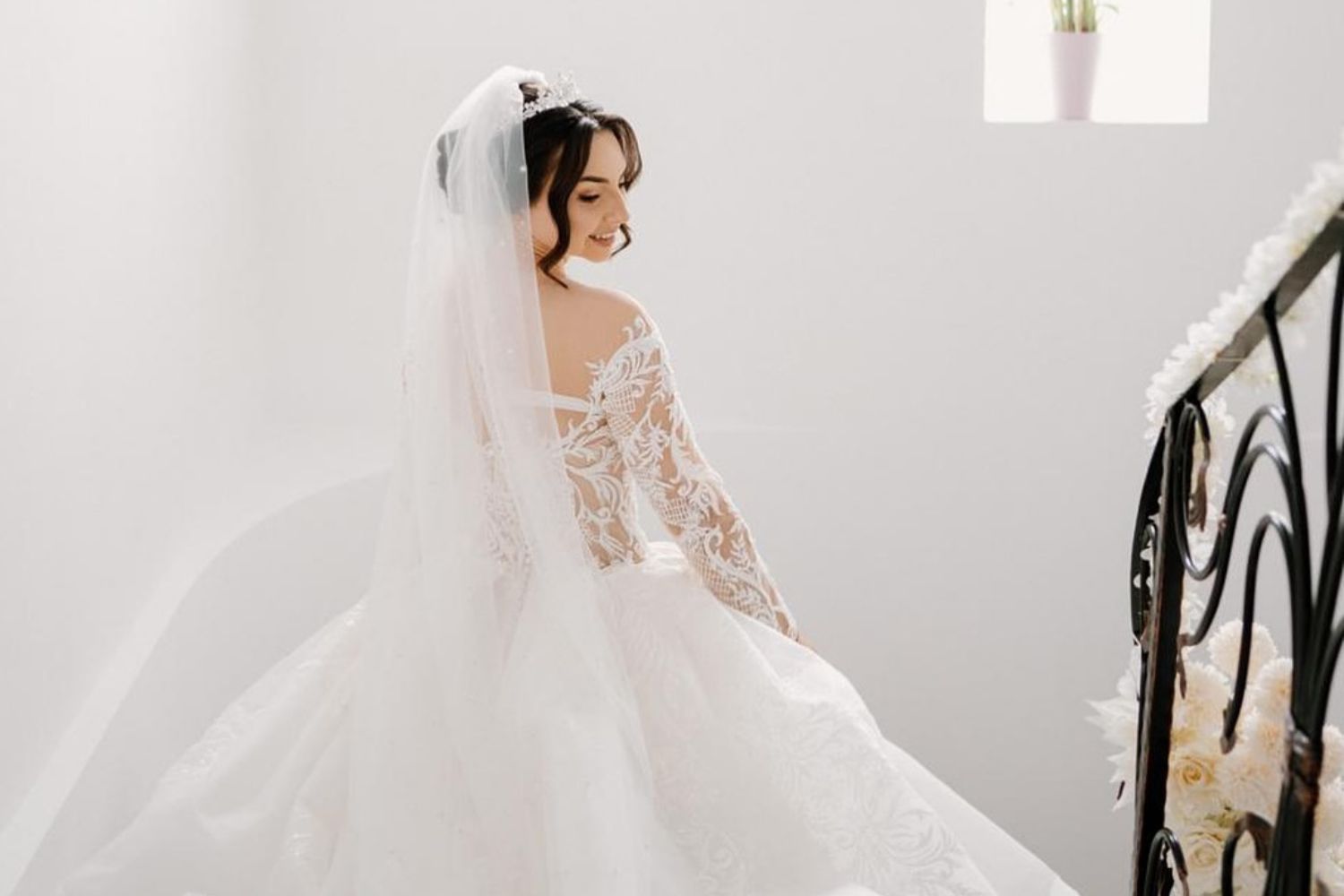
When building your bridal look, it’s easy to focus exclusively on the dress and leave accessories for “later.” The veil, however, is not a last-minute detail. It’s one of those pieces that can completely change the feel of your outfit: it can make it more romantic, more elegant, more dramatic, or, on the contrary, more modern and minimalist.
The right veil should match not only the dress but also the jewelry, the hairstyle, and the overall wedding atmosphere. And if you don’t yet know what length or type suits you, that’s perfectly normal. Most brides only realize what they want after trying on two or three options and seeing the effect in the mirror.
Do you absolutely have to wear a veil?
There’s no “must.” The veil is about your personal style and how you want to feel on your wedding day. For some brides, it’s that traditional element that moves them and makes them feel like “now I truly am a bride.” For others, it might seem too classic or simply not suit them.
Our recommendation is simple: even if you’re not convinced, try on a veil at least once during the dress selection process. Many brides start with the idea that they don’t want a veil and completely change their minds when they see how beautifully it drapes and how it complements the dress.
How to choose the perfect veil to match your dress
The simplest rule is to think of the dress as the main piece and the veil as the frame that enhances it. When the dress is elaborate, with lace, appliques, pearls, or embroidery, a clean, fine tulle veil can look spectacular precisely because it lets the dress be the star. When the dress is simple and elegant, a veil with details – lace, a decorated edge, or delicate appliques – can add exactly that “something” that completes the look without overpowering it.
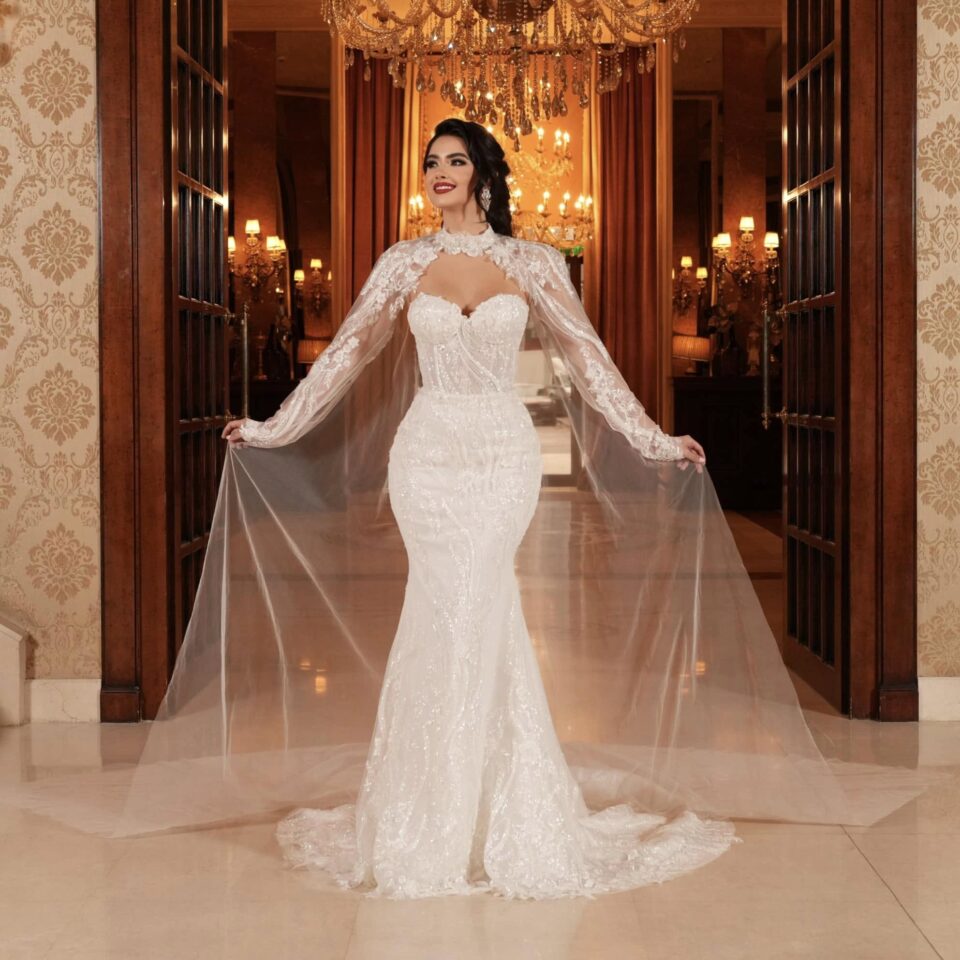
The shade of white is also important. Not all “whites” are the same: optical white, ivory, warm white, slightly creamy tones. The veil must be as close as possible to the shade of the dress; otherwise, the difference will be visible in photos. Therefore, it is ideal to choose the veil in the context of the dress or at least have a clear reference of the shade.
Regarding length, many brides choose a veil that slightly extends beyond the dress’s train or drapes beautifully over it. It’s an elegant effect that looks superb when walking and in photos.
Types of Veils
Blusher Veil (the veil that covers the face)
This is that classic variant that many people immediately associate with the traditional image of the bride. The front part is lowered over the face during the entrance to the church and is lifted during the ceremony. If you like the idea, it can be a very emotional and cinematic moment. If not, you can have a superb veil without this piece.
Long Veil, Cathedral Length
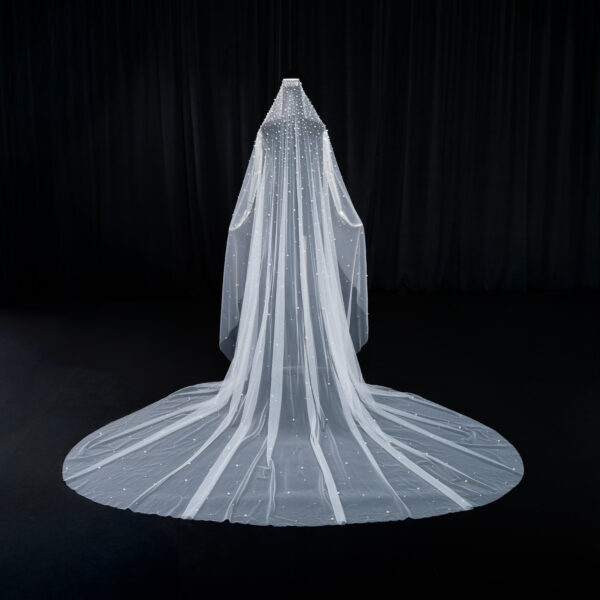
This is one of the most chosen lengths because it has that “wow” effect without appearing exaggerated. It looks wonderful with dresses that have a train and is perfectly suited for elegant weddings, whether indoors or outdoors.
Extra Long Veil, Royal Style
If you want a strong visual impact, this is the type of veil that transforms your entrance into a memorable moment. It usually extends beyond the dress’s train and creates a spectacular effect in photos. This is the kind of choice that’s worth trying on with your dress to see exactly how it feels and how it drapes.
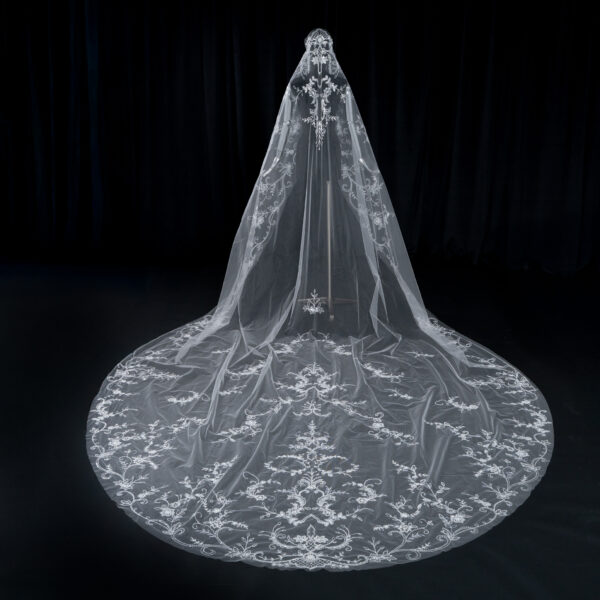
Lace Veil
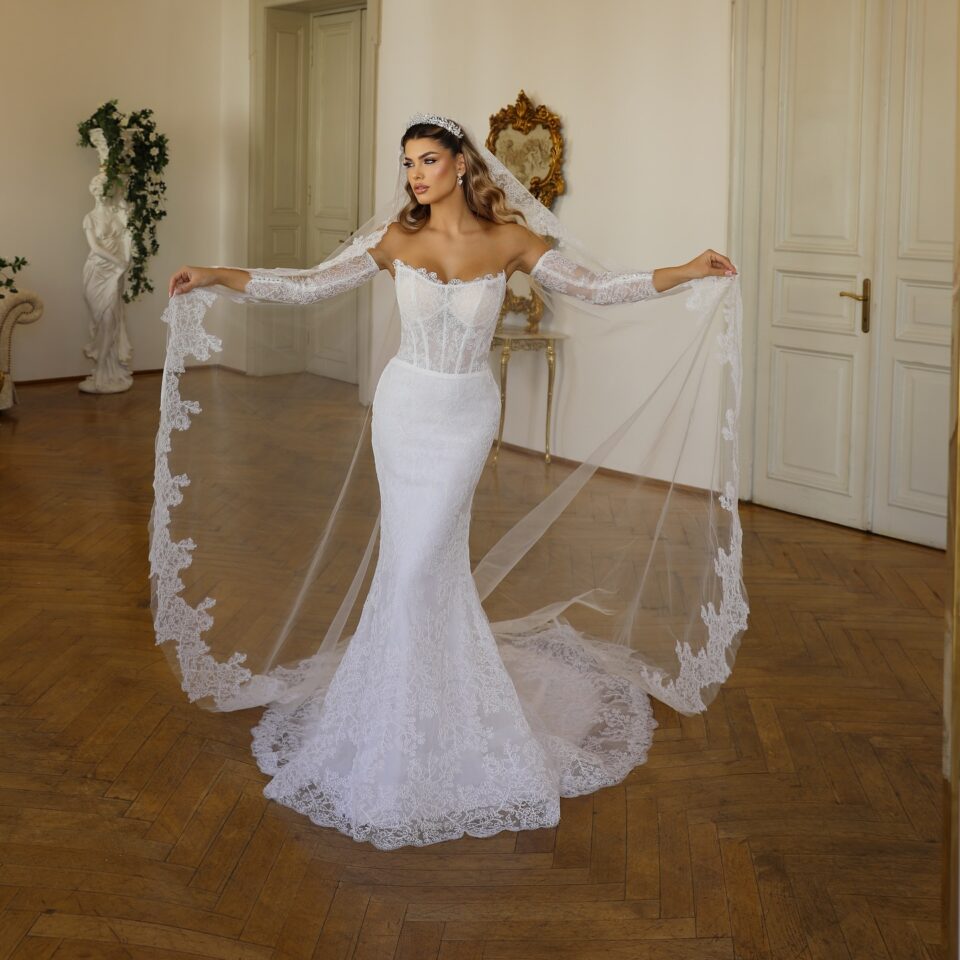
It can have a lace edge, appliqués, embroidery, or a richer outline. It’s an excellent choice if you want a veil that is visible and adds extra detail. You can go for the idea of “matching” the lace of the dress or use the veil as an element that adds texture to a simple dress.
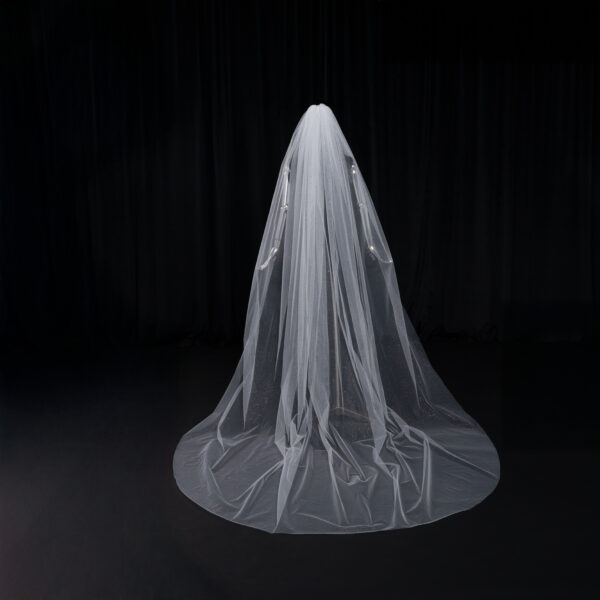
Clean, Simple Veil
A simple veil is more than a “modest” option. In reality, it is one of the most elegant choices, especially when the dress has strong details. A fine, well-chosen tulle can look extremely refined and timeless.
Veil with pearls or crystals
If you want a discreet yet visible detail, delicately applied pearls or crystals are an excellent solution. They are not “too much,” but they add light and a sophisticated air. It’s also an easy option to match with many types of dresses.
Short veil
Short veils are perfect for short dresses, jumpsuits, civil ceremonies, or for brides who want a more modern look. You can choose a birdcage veil, a shoulder-length veil, or a waist-length veil, depending on the dress style.
Current veil trends
Lately, veils with pearls are seen more and more often – a feminine, timeless, yet surprisingly elegant detail. Veils with subtly colored appliques, fine embroidery, or discrete initials/monograms are also in style for brides who want a personal and distinctive element.
Veil and hair accessories: can they be worn together?
Yes, and they even look great when correctly balanced. There’s a myth that if you wear a veil, you can’t also wear a tiara, headband, or decorative comb. In reality, on your wedding day, everything is a bit more of a “statement” than usual: your hairstyle has more volume, your makeup is more defined, and accessories are chosen specifically for their effect.
Furthermore, the veil is usually worn for the ceremony and photos, and then it can be removed for the reception. So you have the freedom to create a complete look, without feeling like you have to choose just one element.
 EN
EN  RO
RO