


This post is also available in:
What alterations can be made to wedding dresses
Choosing the wedding dress is, without a doubt, one of the most emotional moments in wedding preparations. However, what many brides-to-be discover only later is that the perfect dress is not just about the chosen design, but also how it is tailored to the body. Wedding dress alterations are just as important as choosing the dress and make the difference between a simply beautiful dress and one that looks “made” for you.
Over the years, bridal stylists and specialized seamstresses have worked closely with hundreds of brides, and the experience gained shows one clear thing: there is no wedding dress that does not need alterations.
What wedding dress alterations are
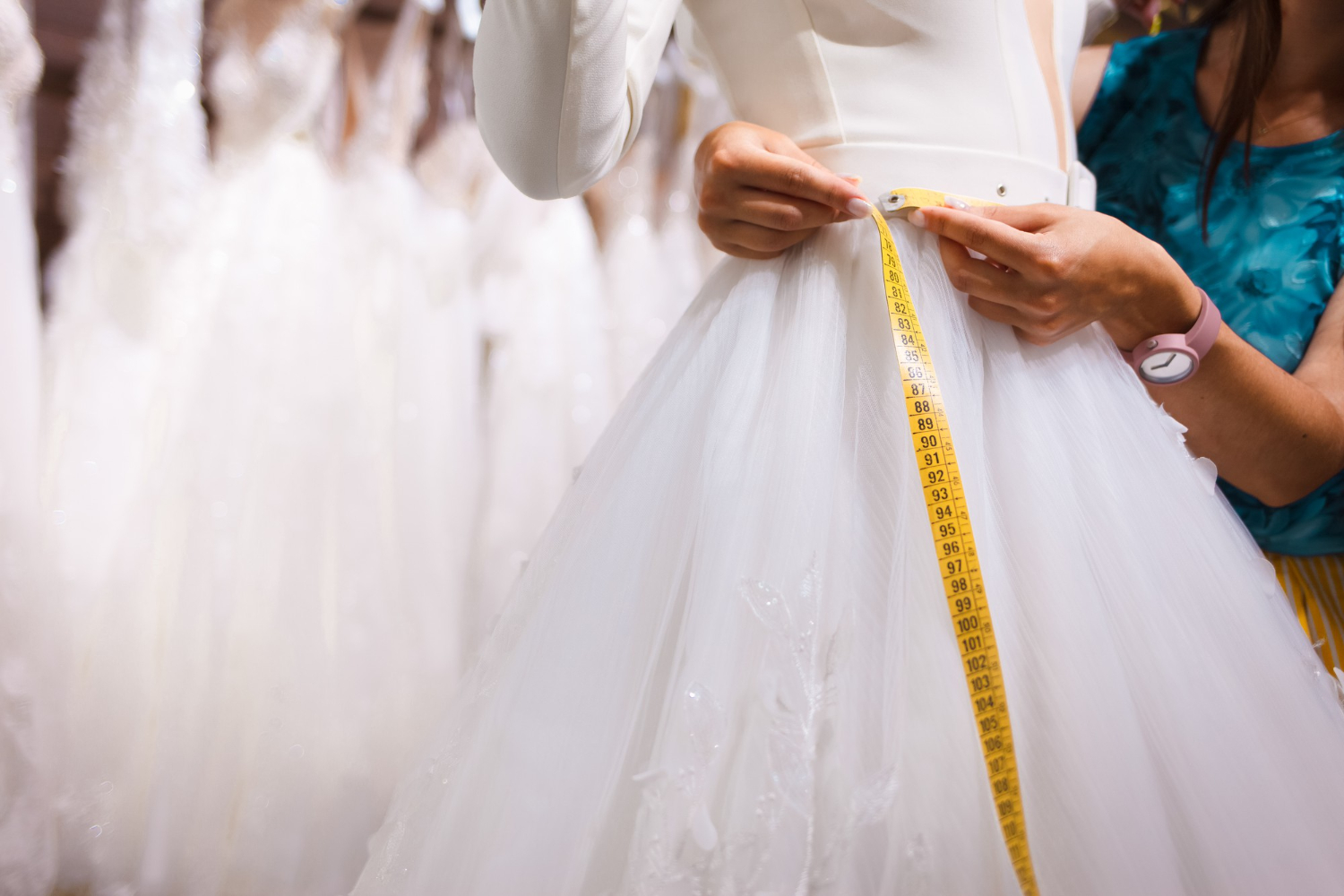
Alterations represent the process through which the dress is adapted exactly to your body proportions. During fittings, the seamstress will take precise measurements and mark the areas that need adjustment so that the dress fits perfectly, is comfortable, and enhances your silhouette.
A dress worn without alterations will, in most cases, be loose in certain areas and will not provide the necessary support.
Does every dress need to be altered?
The answer is simple: yes. Every wedding dress needs alterations. Standard sizes are not created to perfectly fit all body shapes.
For example, it is very common for the bust and hips to correspond to different sizes in manufacturers’ charts. In these situations, the dress is ordered in the larger size, and the upper part is adjusted afterward.
Also, the length of the dress is almost always modified, especially for brides who do not have a standard height.
The most common wedding dress alterations
There are several adjustments considered standard. Altering the bust, waist, and hips is essential for the dress to fit properly and provide support. These are complemented by hemming the dress and creating the bustle system, necessary for freedom of movement during the event. The difference between a properly fitted dress and an unprepared one is similar to the difference between a custom-tailored suit and one worn straight off the hanger.
How the ideal length is determined
There is no universal rule, because every bride wants to wear her dress in a certain way. One of the most appreciated options is the so-called “floor touch,” when the dress lightly touches the ground without “sweeping” it. This length prevents accidents and allows for elegant movement. A skilled seamstress will know how to combine technical expertise with the bride’s wishes so that the final result is both aesthetic and practical.
Will the shoes be visible after alterations?
It depends on the dress style. In the case of mermaid or A-line dresses, the tip of the shoes may become visible when the bride walks. When standing still, the shoes should not be visible. For this reason, choosing the shoes is important not only in terms of comfort, but also design.
What happens to the train during alterations
The train is not cut unless the bride wants this. Adjustments are made in the front area of the dress, and the sides are slightly rounded for a harmonious look. The train remains intact and is later bustled for the reception.
Changing shoes during the day
The trend of wearing sneakers or low shoes at the reception is becoming increasingly popular. However, this raises an issue related to the length of the dress.
If the dress was altered for heels, switching to flat shoes will make it too long. That’s why it’s recommended to keep the same heel height throughout the day or choose flat shoes from the start.
Altering dresses with lace or appliqués
Dresses with lace, embroidery, or beads require much more meticulous work. The appliqués are removed by hand, the dress is shortened, and then the details are reapplied. It is one of the most complex alteration processes and requires a seamstress with real experience in bridal gowns.
When alterations should begin
In general, alterations start about eight weeks before the wedding. However, this timeline may vary depending on weight fluctuations or the complexity of the desired changes. Scheduling the first fitting in advance helps avoid last-minute stress.
How many fittings are needed
On average, between three and four fittings are needed. The first is for determining the changes, the second for fine adjustments, the third for finalizing, and the last for picking up the dress. Fewer fittings can mean rushing, and rushing is never a good ally in this process.
What custom changes can be made
A wedding dress can be almost completely customized. Necklines can be modified, lace sleeves can be added, the back of the dress can be lowered, or additional appliqués can be included.
Support elements, such as fine mesh or internal boning, are often invisible but essential for comfort and support, especially for a fuller bust.
Who should attend the fitting appointments
Experts recommend that the bride come alone or accompanied by just one trusted person. Fittings are technical, focused on details and precise decisions, not on the opinions of a large group.
Wedding dress alterations are not a minor detail, but an essential step that transforms a beautiful dress into a memorable one. For brides who want a complete experience, from choosing the dress to achieving the final flawless fit, it is important to work with professionals who deeply understand this process.
In Romania, more and more brides are choosing dresses that combine spectacular design with real attention to detail and proper alterations. One example is Aryanna Karen, a brand that emphasizes the quality of the dresses, the perfect fit, and careful guidance for each bride, so that the chosen dress truly becomes the one she dreamed of.
 EN
EN  RO
RO